Case Study
Persistent Issue Detection for Multi-Unit Housing
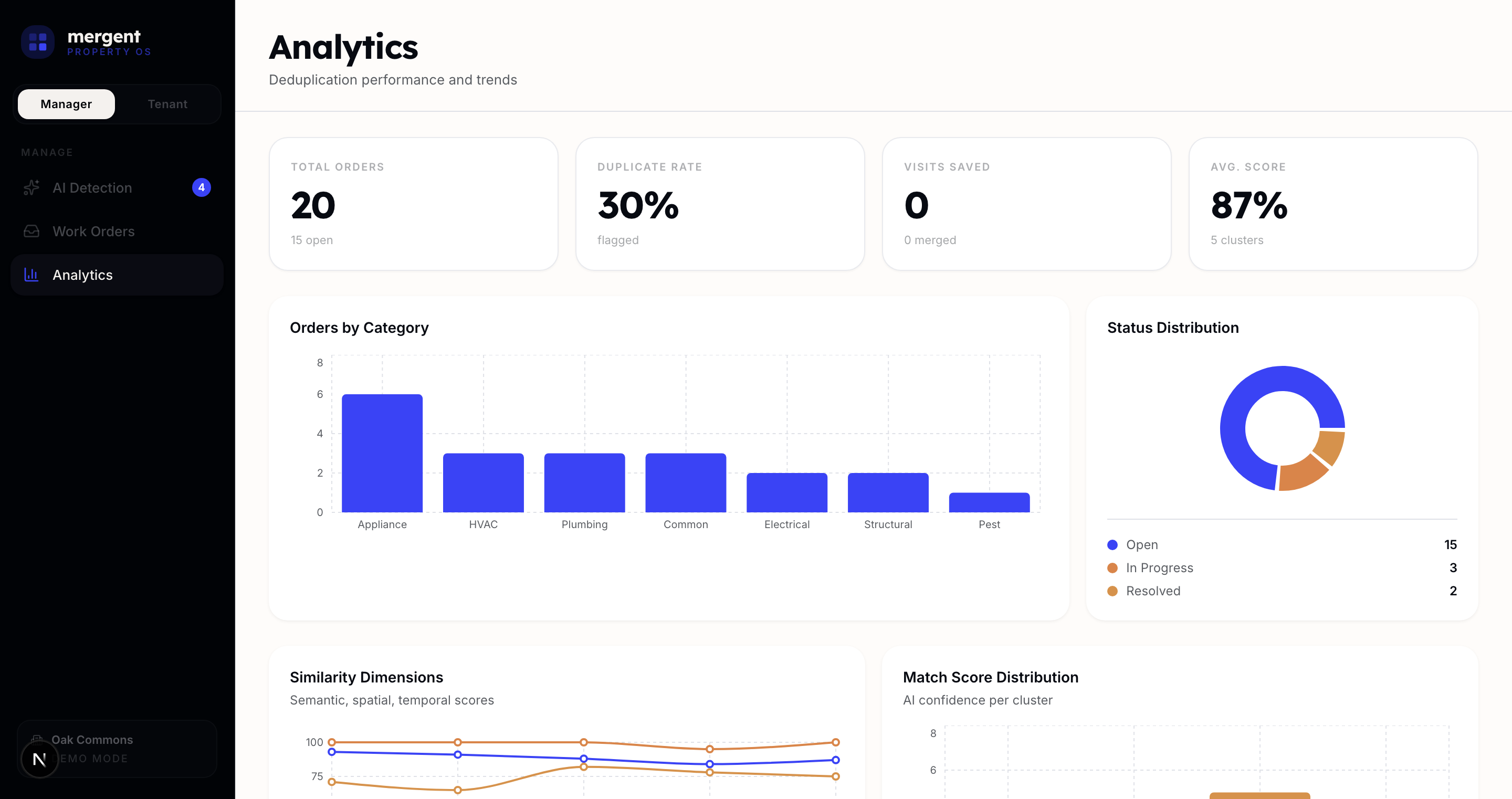
A property management software company approached me with a recurring operational challenge: maintenance teams were overwhelmed by duplicate work orders, making it difficult to identify and prioritize unresolved issues.
My role was to explore the root cause of this behavior and design an AI-assisted maintenance prioritization system that reduces duplicate requests while improving operational clarity and tenant trust, without removing human oversight from the workflow.
Role
Product Designer
Focus
AI/UX, Systems Thinking
Skills
UX Research, UI Design, Product Strategy
Project Overview
The client observed that tenants frequently submitted multiple requests for the same problem when they didn't receive timely updates or visibility into the status of their original submission. As a result, maintenance queues became cluttered, issue tracking became fragmented, and property managers struggled to identify which problems required immediate attention.
The client wanted to explore how AI could help identify recurring issues without removing human oversight from the workflow, reducing triage effort while improving operational visibility and tenant confidence.
The Challenge
The client's existing system treated every maintenance request as an independent task, regardless of whether the issue had already been reported. This created several compounding problems:
- Duplicate maintenance requests cluttering the queue
- Increased triage workload for property managers
- Fragmented issue histories
- Delayed prioritization of critical problems
- Reduced tenant confidence in the maintenance process
My Approach
Through research and analysis, I reframed the problem from one of duplicate detection to one of unresolved user uncertainty. I identified that repeated maintenance submissions were often signals of deeper issues:
Lack of status visibility
Unresolved tenant frustration
Operational bottlenecks
Building-wide maintenance failures
Based on this insight, I designed an AI-assisted work order consolidation system that helps property managers identify persistent unresolved issues while maintaining full control over final decisions.
The Solution
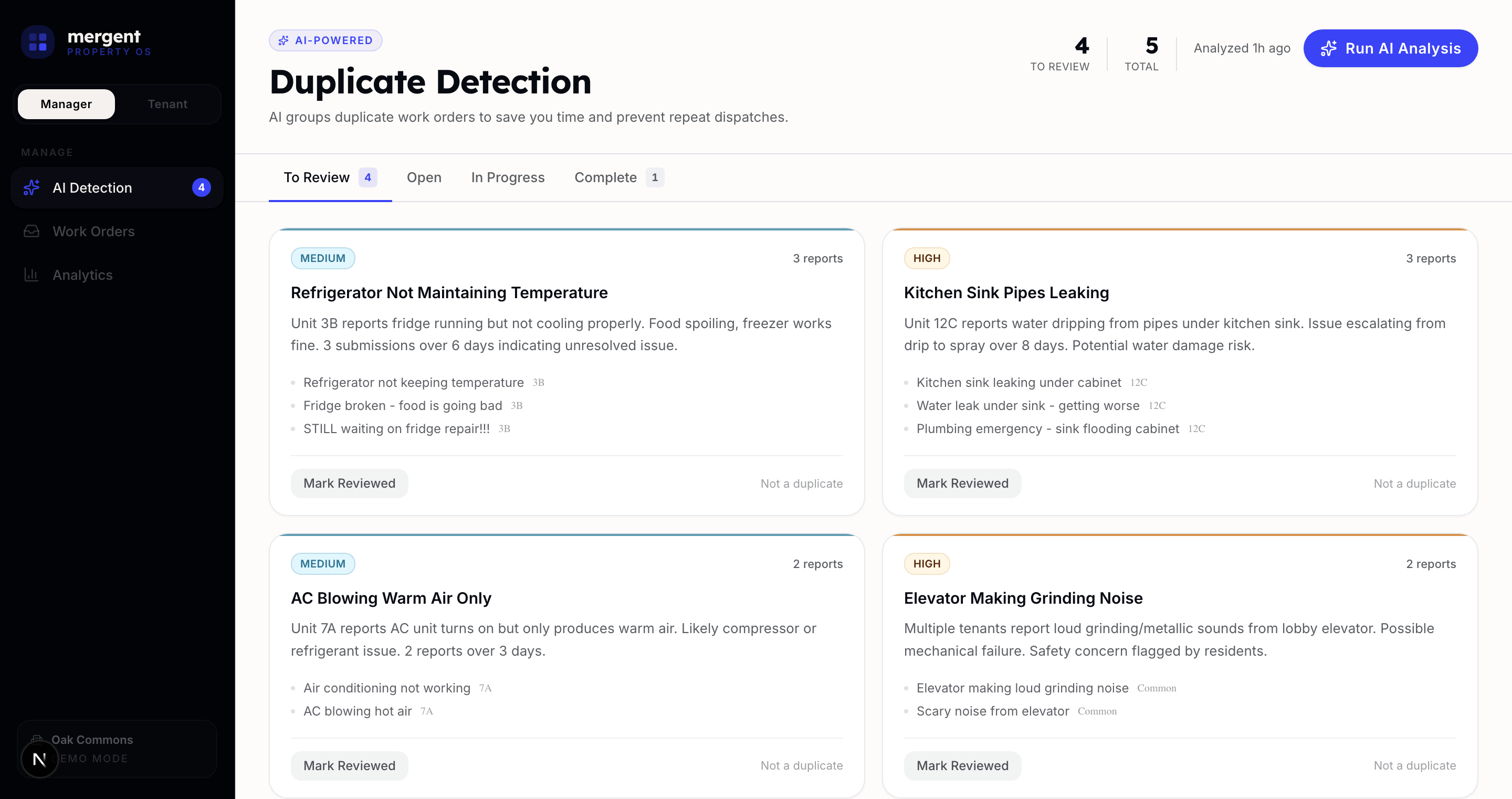
The proposed system uses AI to assist with maintenance triage, reducing effort while improving operational visibility, rather than replacing human decision-making.
- Detecting semantically similar work orders
- Recommending potential duplicate groupings
- Identifying persistent unresolved issues
- Escalating long-running maintenance problems
- Detecting recurring issues across multiple units
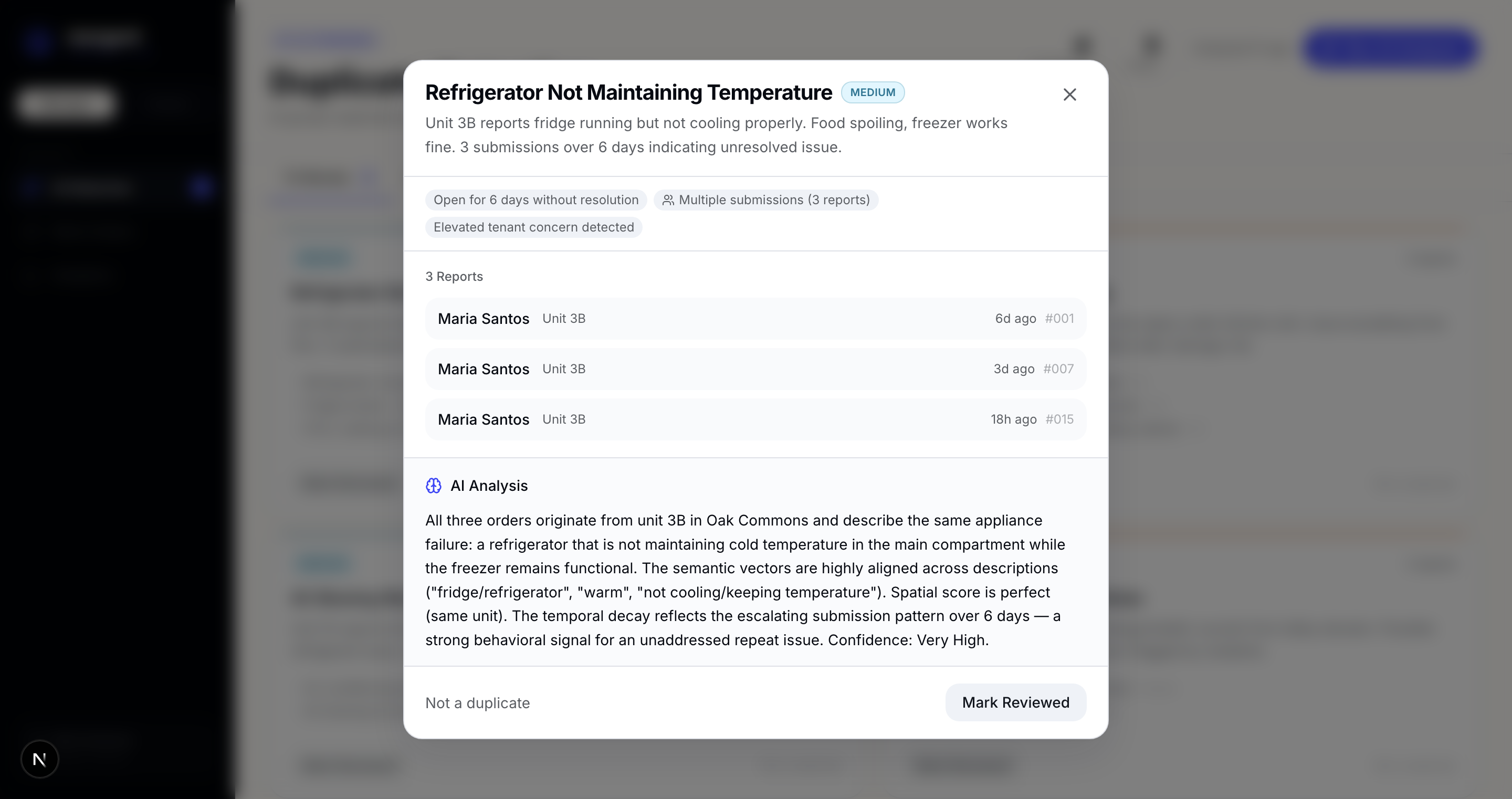
- Providing explainable recommendations with human approval controls
Prioritization Framework
To determine urgency and escalation priority, the system evaluates multiple signals together rather than relying on raw ticket volume.
| Signal | Purpose |
|---|---|
| Safety keywords | Identifies urgent hazards and risks |
| Time unresolved | Detects long-standing issues |
| Duplicate frequency | Surfaces recurring operational problems |
| Multi-unit recurrence | Identifies potential building-wide failures |
| Semantic similarity | Groups related requests |
| Tenant sentiment | Detects escalating frustration |
Key Design Principles
Transparency
Users should understand why issues are being grouped or escalated.
Human Oversight
Property managers retain final authority over work order consolidation.
Trust Building
Tenants need visibility into issue status to reduce repeat submissions.
Cognitive Load Reduction
Interfaces should prioritize meaningful problems rather than raw ticket volume.
Proposed Features
- AI-powered duplicate detection suggestions
- Persistent issue timelines
- Escalation indicators for unresolved problems
- Building-wide pattern detection
- Explainable AI confidence scoring
Intended Outcomes
For Property Managers
Lower triage workload and faster issue prioritization through assisted, explainable recommendations.
For Tenants
Improved confidence and transparency, with clear visibility into issue status to reduce repeat submissions.
For Operations
Reduced duplicate maintenance requests and a cleaner, more reliable issue history.
For the Property
Earlier detection of infrastructure-level problems before they become building-wide failures.
Reflection
This project reinforced the importance of looking beyond surface-level user behavior to understand the underlying systems problem. What initially appeared to be a duplicate ticket issue revealed a broader challenge involving communication gaps, operational ambiguity, and user trust.
By reframing the problem, I was able to design a solution that balanced AI assistance with human oversight while addressing both operational efficiency and tenant experience.
Want to see more of my work?
View All Projects